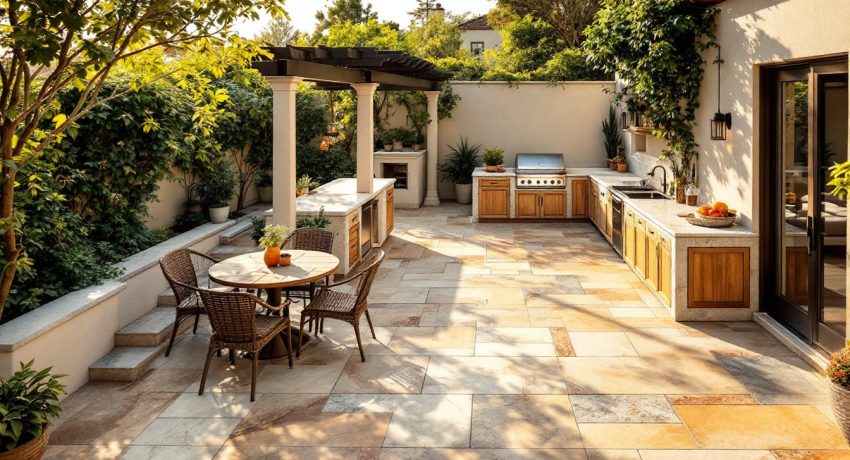

A well-designed outdoor kitchen tile selection sets the stage for years of entertaining and cooking under the open sky. Whether you’re planning a full renovation or refreshing existing surfaces, outdoor kitchen tile ideas range from weather-resistant porcelain to elegant natural stone, each offering distinct aesthetic and performance benefits. The right tile not only withstands rain, UV exposure, and temperature swings but also ties your patio design together and defines the entire outdoor living experience. This guide walks you through the best materials, trending styles, and practical considerations to help you choose tiles that blend durability with the look you want.
Table of Contents
ToggleKey Takeaways
- Porcelain tiles are the best choice for outdoor kitchen tile ideas due to their superior moisture resistance, durability in freeze-thaw climates, and ability to withstand UV exposure and temperature fluctuations.
- Proper substrate preparation—including a sloped concrete slab, moisture barrier, and outdoor-rated cement board—is essential to prevent water infiltration, mold growth, and costly damage beneath outdoor kitchen surfaces.
- Natural stone tiles like granite, slate, and travertine offer premium aesthetics but require annual sealing and regular maintenance, making them a higher-maintenance option compared to porcelain.
- Mediterranean, coastal, and modern minimalist styles dominate outdoor kitchen design trends, each requiring different tile formats, colors, and finishes to achieve the desired aesthetic.
- Slip-resistant surfaces (0.60 rating or higher when wet) are critical for safety around grills and water features, and large-format tiles reduce grout lines to minimize water infiltration points.
Why Tile Matters for Your Outdoor Kitchen
Outdoor kitchen surfaces endure constant exposure to sun, moisture, freeze-thaw cycles, and foot traffic that indoor kitchens never face. Choosing the right tile isn’t just cosmetic, it’s structural and financial. Poor tile selection leads to cracking, staining, algae growth, and costly replacements within a few seasons.
Tiles anchor your outdoor kitchen’s visual identity. They tie together cabinetry, countertops, and flooring into a cohesive design that extends your home’s character into the backyard. Well-selected tiles also affect safety: slip-resistant surfaces are critical near grills and water features, especially when wet. Beyond aesthetics, durability matters because outdoor kitchens represent a significant investment. Outdoor kitchens transform your backyard into functional entertaining spaces, and the tile quality directly impacts how long that investment lasts. A quality installation on proper substrate, with adequate slope for drainage and movement joints, prevents water infiltration that causes substrate rot and safety hazards beneath the surface.
Best Tile Materials for Weather Resistance and Durability
Porcelain and Ceramic Tiles
Porcelain tiles are the go-to choice for most outdoor kitchen projects. They’re fired at higher temperatures than ceramic, creating a denser, less porous body that resists moisture absorption, critical in freeze-thaw climates where water trapped in tile causes spalling (surface flaking). Porcelain typically absorbs less than 0.5% moisture, compared to ceramic’s 3–6%. That difference prevents catastrophic failure in winter.
Look for porcelain rated for outdoor use (typically PEI 3–4 for high-traffic areas) with a slip resistance rating of 0.60 or higher when wet. Standard formats run 12×12 inches, 18×18 inches, or larger. Larger tiles mean fewer grout lines, which reduces maintenance and water infiltration points, a real advantage in outdoor settings. Porcelain also handles temperature fluctuations well: unlike natural stone, it won’t expand and contract unpredictably or stain easily.
Ceramic tiles work for covered outdoor spaces (patios with roofs, pergolas) where moisture exposure is minimal. They’re cheaper and come in vibrant glazes and finishes, but moisture absorption makes them risky in open-air kitchens with direct rain exposure.
Both materials require proper substrate: a sloped concrete slab with at least 4 inches of compacted base stone, moisture barrier, and cement board or mortar bed rated for outdoor use. Movement joints (typically ¼-inch spacers) every 8–10 feet accommodate expansion and contraction. Use epoxy or urethane grout, not standard cement-based grout, outdoors, it resists staining and moisture better.
Natural Stone Tiles
Granite, slate, limestone, and travertine offer a premium, timeless aesthetic that many homeowners crave. Granite is the hardest, most stain-resistant option: slate provides dramatic texture and color variation: travertine offers warm, rustic appeal. Each material has trade-offs.
Granite (hardness rating around 7 on Mohs scale) resists scratching and staining better than most stones. It’s still porous and needs sealing every 1–3 years to prevent water absorption and staining. Cost runs $8–$15+ per square foot installed, plus maintenance.
Slate is visually striking with natural cleft surfaces, but it’s softer than granite (5–6 Mohs) and more prone to spalling, especially if freeze-thaw cycles force water into veins. It demands diligent sealing.
Travertine has a warm, beige-to-gold palette and moderate hardness (4–5 Mohs). It’s more porous than granite, so sealing is mandatory. The holes inherent in travertine’s cellular structure can trap dirt and algae, requiring regular cleaning. In freeze-thaw zones, travertine is riskier than porcelain.
Limestone is softer, more prone to acid damage (citrus, vinegar), and works better in dry, covered spaces than open outdoor kitchens. Remodelista curates design inspiration for stone selections, showing how natural materials influence overall aesthetic.
If you choose natural stone, buy honed or flamed finishes for slip resistance (polished stone is slippery when wet). Thickness should be at least 1 inch for durability. Seal before installation and reseal annually. Cost is higher upfront, and ongoing maintenance is non-negotiable.
Top Design Styles for Outdoor Kitchen Tiles
Mediterranean and Coastal Vibes
Mediterranean and coastal styles draw from European and Caribbean traditions: warm earth tones, hand-painted or handmade looks, and organic patterns. These designs evoke relaxation and entertaining.
Mediterranean palettes typically feature terracotta, cream, rust, and deep blue accents. Hand-painted tiles with botanical or geometric motifs add character: think octagons mixed with smaller accent squares in traditional layouts. Porcelain can mimic handmade aesthetics (aging, texture) without the fragility of actual fired clay. Mix tile sizes for visual interest: 12×12 with 4×4 accents, for example. Grout color matters, cream or sand grout harmonizes: dark grout creates contrast.
Coastal styles lean toward blues, whites, and soft grays, often in larger formats (18×18 or larger) with minimal pattern. Porcelain tiles that mimic natural stone or wood planks work well. The simplicity of coastal design makes it forgiving to DIY installers and easier to clean.
Both styles benefit from a mixed material approach: tile for flooring and backsplash, with complementary stucco, stone, or wood elements (pergolas, beams) to complete the theme.
Modern and Minimalist Looks
Modern outdoor kitchen design favors clean lines, neutral palettes, and understated elegance. Large-format porcelain tiles (24×24 inches or larger) in gray, charcoal, or light cream dominate. Matte finishes look contemporary: glossy finishes are less common because they’re slippery outdoors.
Minimalism calls for monochromatic color schemes: all gray, all white, or all black, sometimes with one accent color. Linear patterns (running bond, stack bond) or no pattern at all emphasize simplicity. Narrow grout lines (3mm or less) keep the look streamlined. Concrete-look porcelain (gray, subtle aggregate texture) pairs well with modern stainless-steel appliances and minimalist cabinetry.
Mixed material is also modern: combine large-format tile floors with a tile or stone backsplash in a contrasting texture or tone. An open-concept feel, using the same tile both inside and out, blurs indoor-outdoor boundaries. Southern Living showcases regional takes on contemporary outdoor design where this aesthetic flourishes.
Modern kitchens often demand permitting and structural planning beyond aesthetic choices. Ensure drainage is properly engineered, sloped substrate (1/8 inch per foot minimum) prevents standing water. Movement joints and proper underlayment are non-negotiable.
Both style families require careful substrate prep and professional-grade installation. Beginner DIYers should hire professionals for large, complex layouts: small accent areas (backsplash, small patio sections) are doable with patience and the right tools (wet saw for clean cuts, grout float, spacers, level). DIY kitchen transformations succeed when prep work is meticulous. Kitchen islands and outdoor extensions often share similar tiling principles, proper substrate, drainage, and finish selection determine longevity and appearance. Consider consulting an outdoor tile specialist for sourcing unique or specialty tiles that align with your vision.