

An outdoor kitchen bar transforms your backyard into an entertainment hub where food, drinks, and conversation flow naturally together. Whether you’re hosting weekend gatherings or creating a personal retreat, the right bar design elevates both functionality and style. Homeowners are moving beyond simple picnic tables to invest in dedicated bar stations that blend seamlessly with their outdoor living spaces. The key is matching the bar concept to your budget, space, and lifestyle. This guide walks through seven proven outdoor kitchen bar ideas, from sleek modern designs to rustic stone setups, so you can pick the approach that fits your home.
Table of Contents
ToggleKey Takeaways
- Outdoor kitchen bar ideas range from sleek modern minimalist designs to rustic stone setups, each matching different budgets, climates, and lifestyle needs.
- A minimalist outdoor bar with stainless steel countertops and recessed LED lighting maximizes functionality in smaller yards without visual clutter or excessive maintenance.
- Rustic stone and wood bars develop character over time but require annual water-resistant sealant application to prevent water infiltration and staining.
- Compact bar solutions as small as 4–6 feet work perfectly for limited spaces by using fold-down tops, vertical storage, and under-counter beverage coolers.
- Professional-grade equipment like draft beer systems, built-in ice makers, and commercial-grade faucets transform your bar into a full-service station for serious entertainers.
- Success depends on matching your outdoor kitchen bar design to your climate, available space, and maintenance budget while prioritizing proper drainage and sealed surfaces.
Modern Minimalist Bar Design
Clean lines and zero clutter define the minimalist outdoor bar. Think horizontal stainless steel countertops, a single-color base, and recessed LED lighting built into the underside of the counter. This style works especially well for smaller yards because it doesn’t visually crowd the space. Start with a sturdy frame, pressure-treated 4×4 posts sunk 24–30 inches into concrete footings are industry standard, then cap it with a polished concrete or composite countertop. Stainless steel works beautifully but requires regular wiping to avoid fingerprints: concrete is forgiving and develops character over time. Add a single-line bar sink with a deck-mounted faucet, minimal cabinetry below for spirits and glasses, and you’re done. The beauty of minimalism is that every element serves a purpose. No decorative flourishes means less maintenance and a timeless aesthetic. Pair your bar with sleek bar stools in powder-coated aluminum or teak wood. An outdoor kitchen bar doesn’t need frills to feel premium.
Rustic Stone and Wood Bar Stations
Rustic bars ground your outdoor space in natural materials. Stacked dry-stacked fieldstone (no mortar) or ledge stone for the facade creates authentic character, while rough-hewn timber beams overhead add warmth. The countertop can be live-edge wood sealed with polyurethane (for durability), honed slate, or even bluestone. This approach requires more elbow grease but rewards you with a bar that improves with weathering. Dry-stacking is forgiving if your foundation is level: dry-stacked stone doesn’t require mortar, so mistakes are easier to correct than on a mortared wall. Apply a water-resistant sealant to porous stone yearly to prevent water infiltration and staining. Wood surfaces need resealing every 18–24 months in climates with significant moisture or UV exposure.
Built-In Beverage Coolers and Storage
A rustic bar is the perfect home for under-counter beverage coolers or drawers. A standard 24-inch under-counter cooler fits nicely into a custom cabinet frame and keeps drinks at 35–38°F without running a full refrigerator. Pair it with open shelving above for glassware and bottles, the layering of closed storage and display creates depth. For humid or salt-air environments, use stainless steel or marine-grade composite shelving. A kitchen island concept translates perfectly outdoors: closed storage below masks clutter while open shelves above encourage guests to help themselves. Build custom frame sections around your cooler using pressure-treated lumber, then sheath with stone, stucco, or composite panels. Drill drainage holes if the cooler vents warm air into a closed cavity.
Tropical Tiki Bar Aesthetic
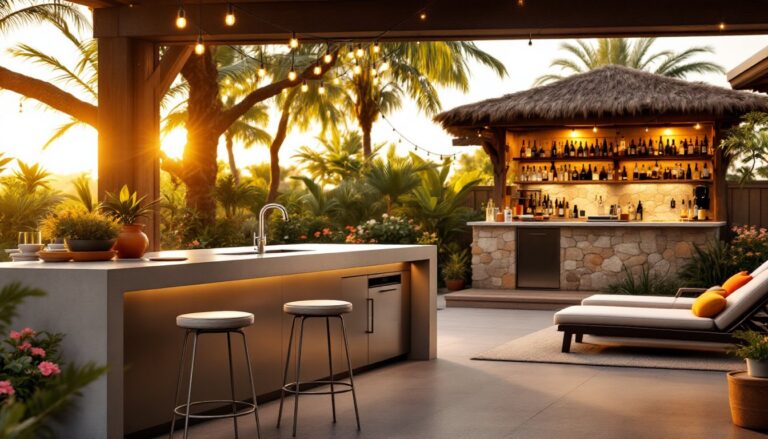
A tiki bar invites playfulness into your yard with grass-thatched roofs, bamboo accents, and bright colors. Install a peaked tiki roof frame using pressure-treated 2×4 lumber and clad it with synthetic tiki thatch (more durable than real thatch) for that island getaway feel. Bamboo poles, even pressure-treated bamboo, provide visual interest but rot faster in wet climates, expect to replace them every 5–7 years depending on exposure. The counter itself can be simple: a reinforced 2×10 or 2×12 timber edge around a composite deck platform, stained in warm honey or teak tones. Wrap the supporting posts with rope or bamboo screening. Add colorful outdoor cushions, string lights overhead, and tropical plants around the perimeter. A small ice maker or cooler tower (a tall cabinet with built-in ice and drink storage) fits the tiki vibe perfectly. Keep the bar small, typically 8–10 feet long, so it feels cozy rather than commercial. The Kitchn‘s design philosophy emphasizes mixing function with approachable style, a principle that suits tiki bars well.
Compact Bar Solutions for Small Spaces
Not everyone has 20 feet of patio. A 4-foot or 6-foot bar counter tucked into a corner or against your house is enough for two people to work comfortably. Use a fold-down bar top (piano hinges on a wall-mounted post) if space is super tight, it drops down when needed and folds up to reclaim your patio. For a permanent compact bar, build a single-depth counter (18–24 inches deep) on a sturdy frame. Mount a 12-inch under-counter beverage cooler or even a small wine cooler to maximize drink storage without sprawl. A single prep sink and a minimal shelf above suffice. Vertical storage is your friend in tight quarters: wall-mounted racks for glasses, a tall narrow cabinet for bottles, and hooks for bar tools. Small kitchen ideas apply here too, when square footage is limited, every inch counts. Use a countertop material that resists staining and wear, like honed granite or composite, because a small bar gets heavy use. Choose bar stools that tuck fully under the counter (no overhang) or go with standing-only service to preserve floor space.
Professional-Grade Bar Equipment and Finishes
Serious entertainers invest in pro-grade equipment. A draft beer system, built-in ice maker (produces 40–100 pounds of ice daily), and bottle cooler with glass doors transform your bar into a full service station. These appliances run 110–240V depending on the model: run dedicated circuits and bury electrical lines in PVC conduit rated for outdoor use. A stainless steel sink with a commercial-grade faucet and drain board makes bartending efficient. Install a backsplash in tile, stone, or stainless steel to protect the wall from water splash. Polished granite or quartzite countertops resist stains and heat (important if you’ll set down hot glassware). Choose a multi-tap beer tower if you want variety, or go simple with a single tap. Heavy-duty bar rail (stainless steel or brass) gives guests something to grab and looks professional. Consider a POS system (point-of-sale) if you plan frequent entertaining, track inventory, pour costs, and cocktail recipes. Bar cart styling principles scale up here: organize bottles by spirit type, use clear containers for garnishes, and keep backup stock in a mini-fridge below counter.
Conclusion
Your outdoor kitchen bar is a long-term investment in how you entertain and enjoy your home. Start with a honest assessment: your climate (humidity, freeze-thaw cycles, salt air), available space, and realistic maintenance budget. A minimalist stainless steel bar is low-touch in a dry climate: a rustic stone bar thrives in temperate zones but needs seasonal sealing. Compact solutions prove that you don’t need acreage to create a functional bar. Whatever style you choose, invest in proper drainage, electrical work if needed, and sealed surfaces, these prevent costly repairs later. Your neighbors will be impressed, and more importantly, you’ll actually use the space year-round.