

Your patio door is a portal to outdoor living, but without the right covering, it can leave you squinting at glare, sacrificing privacy, or overheating your home. Patio door coverings do more than look good, they control light, reduce heat transfer, enhance security, and carve out a private retreat from the neighborhood. Whether you’re after a sleek modern aesthetic, practical light control, or full blackout privacy, the right solution depends on your climate, daily rhythm, and design preferences. This guide walks you through seven proven patio door covering ideas, from traditional curtains to cutting-edge films, so you can choose what fits your home and budget.
Table of Contents
ToggleKey Takeaways
- Patio door coverings control light, reduce heat transfer, enhance security, and provide privacy—thermal options can cut heating and cooling costs by 10–15%.
- Curtains and drapes offer versatile style and warmth when ceiling-mounted with heavy-duty brackets, while thermal-lined options deliver year-round temperature control.
- Motorized shades, cellular blinds, and sliding panel systems provide modern aesthetics with precise light control and minimal maintenance compared to traditional window treatments.
- Exterior shades and pergola systems intercept solar heat before it enters your home, making them more efficient than interior coverings for south or west-facing patio doors.
- Security and privacy films offer discreet protection at $8–$20 per square foot, holding glass together if broken and delaying entry by 10–15 minutes without permanent installation.
- The best patio door covering solution balances your climate, daily usage patterns, and design preferences—layering interior and exterior options maximizes comfort and visual appeal.
Curtains and Drapes for Patio Doors
Curtains remain the most versatile patio door covering, offering warmth, light control, and easy seasonal swaps. Unlike typical window curtains, patio door drapes must handle weight and foot traffic without sagging or catching on hardware.
Full-length panels that puddle slightly on the floor create an elegant, formal look while softening hard door lines. Sheer curtains filter harsh UV rays while maintaining views and privacy from a distance: layering them with heavier thermal-lined drapes lets you control light and temperature year-round. Thermal curtains with polyester or cotton-linen blends reduce heat loss in winter and reject sun heat in summer, research shows quality thermal liners can cut heating and cooling costs by 10–15%.
When hanging patio door curtains, a ceiling-mounted rod (rather than door-mounted) makes the space feel larger and allows full door operation without curtains bunching. Opt for a wider rod with heavy-duty brackets rated for at least 20 pounds per bracket: patio curtains carry significant weight. S-hooks or pinch-pleat hardware won’t slip as easily as basic rings on heavier fabrics.
Consider light, breathable fabrics for summer (cotton voile, linen blends) and dense, insulated materials for winter. Washing and care matter: machine-washable fabrics save frustration, though dry-cleaning extends the life of high-end drapes. Budget roughly $20–$60 per panel for mid-range quality: custom-made thermal drapes run $80–$150+ per panel but justify the cost if energy efficiency matters in your climate.
Blinds and Shades: Modern and Practical Options
Blinds and shades offer precise light control, clean aesthetics, and durability, ideal if you want no-fuss daily operation. Roller shades are the minimalist’s choice: a single fabric panel that raises and lowers via a spring or cordless motor, fitting neatly into the door frame or wall-mounted above it. Thermal-blackout roller shades completely block light and heat, making them perfect for bedrooms or media rooms.
Cellular shades (honeycomb shades) trap air in their dual chambers, providing excellent insulation for both hot and cold climates. Cordless or motorized options eliminate dangling cords, a safety bonus if children or pets are around. Expect to pay $60–$200 for a quality cellular shade, depending on size and motorization.
Vertical blinds suit wide patio doors, especially in commercial or contemporary homes. The slats stack to one side, allowing full door access while still controlling light from the side, and they withstand humidity better than fabric shades. UV-rated vinyl or PVC slats resist fading and moisture damage.
Roman shades fold into neat horizontal pleats when raised, adding a tailored, designer look. They’re dressier than rollers and suit traditional or transitional décor. But, they require more complex installation and don’t allow partial door operation once lowered.
Shades and blinds work best in combination with curtains for layered light control. A motorized shade topped with decorative sheer panels strikes a balance between modern functionality and timeless style. Installation typically costs $100–$300 in labor if hiring a professional: DIY mounting takes 30–60 minutes per door if you own a cordless drill.
Sliding Patio Door Panels and Track Systems
Sliding door panels (sometimes called panel track blinds or shoji panels) combine the opacity of traditional blinds with the architectural clean lines of modern design. Individual fabric panels slide along a top and bottom track, allowing you to stack them to one side for full door access or layer them for privacy.
These panels are custom-fitted to your door opening and come in a vast range of fabrics, from light-diffusing sheers to complete blackout materials. Because they glide on a track rather than rotating or folding, they suit wider doors and maintain taut, unwrinkled appearance. Motorized versions let you open and close all panels with a remote or smartphone, adding luxury and convenience.
DIY installation is feasible if you’re comfortable measuring precisely and mounting a track securely to the wall or door frame using heavy-duty anchors (typically lag bolts or toggle bolts rated for 50+ pounds). The track itself mounts with 3-inch drywall screws into studs where possible: if studs aren’t available, use molly bolts or E-Z anchors rated for your panel weight.
Panel systems cost $250–$800 per door depending on fabric, size, and whether motorization is included. The payoff is a clean, modern aesthetic that doesn’t accumulate dust like vertical blinds and suits mid-century or minimalist décor. They also handle humidity well, making them suitable for kitchens, bathrooms, or mudrooms.
Outdoor Shading Solutions
If your patio door opens onto a porch, deck, or sunroom, controlling light before it enters the house is far more efficient than filtering it indoors. Exterior shades and pergola systems intercept the sun’s heat at the source.
Roll-up exterior shades mount above the door on the outside and lower like a garage door, blocking 60–90% of solar heat depending on material. They’re ideal for south or west-facing exposures where afternoon sun drives cooling costs. Motorized models with wind sensors retract automatically in strong gusts, protecting them from damage. Budget $400–$1,000 installed: they require secure wall anchoring and weatherproof hardware.
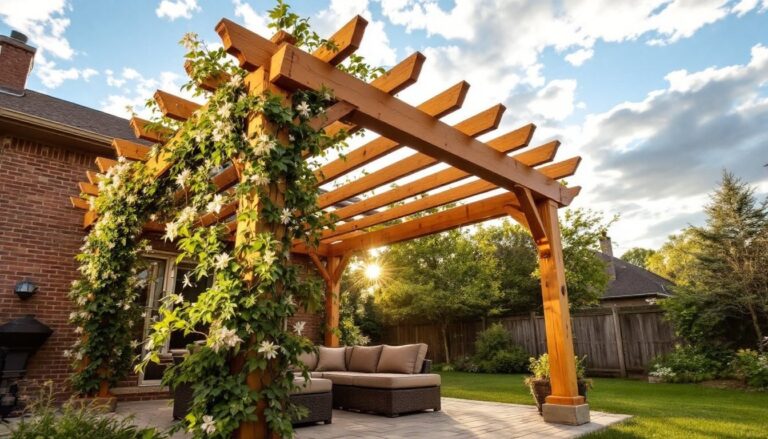
Pergolas and louvered systems provide style and shade without closing off views. Fixed pergolas offer permanent dappled shade: adjustable louvered pergolas (like Solara or Sunair systems) rotate slats to angle the sun throughout the day, operated manually or by motor. These are permanent structures requiring post anchoring into deck or patio substrates: many jurisdictions require a permit if the structure exceeds certain height or footprint thresholds. Check local codes before planning.
Retractable awnings mount flush against the wall when not in use and extend over the patio on demand. Motorized versions activate at the touch of a button: manual crank versions cost less ($300–$600) but demand elbow grease. Retractable awnings suit renters and those who want flexible sun control, extend them on hot afternoons, retract them for morning light or stargazing.
Exterior solutions also work in concert with interior coverings. A layered approach, outdoor shade plus interior shades, maximizes control and comfort while maintaining design coherence.
Security and Privacy Films
If privacy and security matter more than opaque coverings, window films offer discreet protection. Frosted privacy films obscure view while allowing light through, perfect if you want brightness without a closed, cave-like feel. They install directly on glass with static cling (removable, renter-friendly) or adhesive (permanent, more durable).
One-way mirror films (also called reflective films) let you see out clearly during the day but make the glass look like a mirror from the outside, blocking sightlines into your home. They’re especially useful for ground-floor doors or homes near sidewalks. Expect to pay $8–$15 per square foot installed: a standard sliding glass door (roughly 50–60 square feet) costs $400–$900 professionally installed.
Security films contain a polyester layer that holds glass together if broken, preventing shards from scattering and blocking forced entry. They don’t stop a determined burglar, but they delay entry by 10–15 minutes, often enough to trigger alarms or allow escape. Security films are thicker than privacy films and cost $12–$20 per square foot. They’re worthwhile if your patio door faces a secluded area or if break-in risk concerns you.
Film installation requires a clean, dry surface, a squeegee, and patience. DIY application is possible but challenging, any dust, air bubbles, or uneven application shows. Hire a professional for flawless results, especially with high-security or reflective films. Films don’t require structural modification, making them ideal for renters or temporary solutions. They also reduce glare and UV exposure to furniture, a secondary benefit many homeowners appreciate.
Choosing the Right Patio Door Covering
Selecting a patio door covering hinges on answering three questions: What’s the primary function? (privacy, light control, energy efficiency, style, security), What’s your climate? (hot/sunny regions favor reflective or thermal solutions: cold climates benefit from insulating drapes), and How much daily operation does the door get? (frequently used doors favor durable, easy-to-operate covers like motorized shades: seldom-used doors tolerate more delicate options).
Climate and season matter enormously. Southern and western exposures gather intense heat: north-facing doors lose warmth in winter. Research from Southern Living, many combining exterior and interior solutions for year-round comfort. In hot, arid climates, exterior shades or reflective films provide the highest ROI: in humid regions, motorized or cordless shades avoid moisture damage.
Budget varies wildly by solution. Thermal curtains cost $100–$300 per door: roller shades, $80–$200: panel track systems, $250–$800: exterior shades, $400–$1,500: films, $400–$900. Labor costs add $100–$300 for professional installation on most options. ImproveNet offers home renovation cost guides and contractor resources to help estimate regional pricing and find qualified installers.
Don’t overlook aesthetics in the race for function. A solution that you’ll actually use and enjoy living with beats a theoretically optimal but visually jarring choice. Layering, combining sheers with thermal drapes, or panels with exterior shading, lets you balance performance and style. Popular patio enhancement ideas include coverings, pergolas, and lighting, all of which work together to define outdoor living spaces. Test samples on your door in morning, afternoon, and evening light before committing: color, translucency, and thermal feel shift throughout the day.
Conclusion
Patio door coverings solve real problems, glare, heat loss, privacy, and security, while anchoring your home’s aesthetic. Whether you prioritize energy savings, a sleek modern look, or flexible light control, the seven options here span every budget and climate. Start by identifying your top priority, measure your door opening, and test samples before installation. Most projects succeed when prep and measurement get the attention they deserve, so take your time mapping the space and researching local installation codes before you commit.