
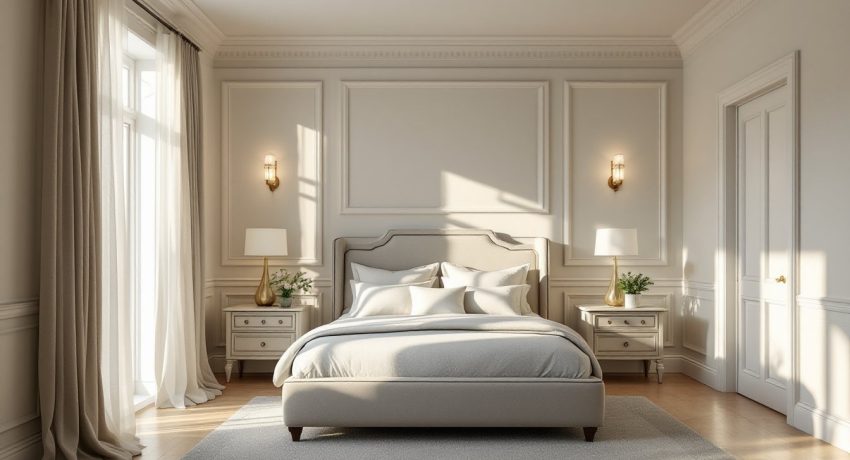

Wall molding transforms a plain bedroom into a polished retreat. Whether you’re drawn to the classic elegance of crown molding, the practical appeal of wainscoting, or the gallery-style charm of picture frame molding, these architectural details add depth, character, and visual interest without requiring major structural work. The beauty of molding projects is that most are achievable for DIYers with basic carpentry skills, a miter saw, and patience for proper measurement. This guide walks through seven molding strategies that work for master bedrooms, from ceiling-to-floor installations to accent wall treatments. Each approach offers different levels of complexity and style impact, so you can choose what fits your space, budget, and skill level.
Table of Contents
ToggleKey Takeaways
- Master bedroom wall molding ideas range from crown molding and wainscoting to picture frame treatments, each offering different style impacts and installation complexity suitable for DIYers with basic carpentry skills.
- Crown molding at the ceiling junction adds formality and hides imperfections, with popular sizes of 3.5 to 4.5 inches in profiles like dentil or colonial designs that match your ceiling height.
- Wainscoting placed 30–36 inches high with a chair rail cap transforms a bedroom with textural depth and classic charm while protecting walls, costing $2–$5 per linear foot in materials.
- Picture frame molding arranged in grids creates a gallery-style accent wall effect that’s ideal for a first molding project, taking 4–6 hours to complete a 2×3 frame configuration.
- Success with any bedroom wall molding project depends on proper prep (locating studs, leveling corners), quality tools like a power miter saw and brad nailer, and finishing with paintable caulk and eggshell paint that hides imperfections.
- Plan 4–8 hours for a single wall of molding work as a weekend project, and always measure twice, use construction adhesive on joints, and prime thoroughly before painting for a polished, intentional bedroom retreat.
Crown Molding for Ceiling Impact
Crown molding sits at the junction between wall and ceiling, drawing the eye upward and adding formality to a room. A standard profile, like dentil crown, colonial, or modern flat designs, instantly upgrades a master bedroom’s visual weight.
Why It Works: Crown molding hides imperfections where walls meet the ceiling, creates shadow lines that add dimension, and frames the room with a finished look. In a master bedroom, it signals quality and intentional design.
Material Options: You’ll find crown in solid pine (easy to paint or stain), finger-jointed pine (more affordable but weaker at joints), MDF (paintable and dent-resistant), and hardwood (premium but pricier). For bedrooms, 3.5-inch or 4.5-inch profiles are popular, large enough to make an impact without overwhelming the space.
Installation Basics: Crown requires coping at inside corners (cutting one piece to fit the profile of the other) and miter cuts at outside corners. You’ll need a miter saw with a crown molding stop or adjustable fence, a stud finder to locate ceiling joists, and 2.5-inch finish nails or a pneumatic nailer. Wear safety glasses: nail guns need respect. Most builders recommend gluing joints with construction adhesive before nailing, then filling gaps with paintable caulk. Pre-finishing crown before installation saves time and gives cleaner results. Many homeowners hire a professional for this step if their ceilings are out of level or corners aren’t square.
Pro Tip: Account for the room’s proportions. A 12-foot ceiling can handle larger profiles: an 8-foot ceiling works better with modest, 2-inch molding.
Wainscoting: Classic Charm and Modern Versatility
Wainscoting, paneling that covers roughly the lower third of a wall, adds textural depth and creates a sense of enclosure. It’s functional (protects walls from chair bumps) and stylish, ranging from traditional raised-panel to modern shiplap or beadboard.
Style Choices: Raised-panel wainscoting uses frame-and-panel construction with decorative recessed panels, perfect for a formal master bedroom. Shiplap mimics farmhouse charm and is easier to install. Beadboard offers Victorian nostalgia. You can also mix panels with paint: panels in white or soft gray, the upper wall in a soothing bedroom color.
Height and Proportion: Standard wainscoting runs 30 to 36 inches high, capped with a chair rail molding. In a master bedroom with standard 8-foot ceilings, 30 inches keeps proportions balanced. Measure from floor to the desired height, snap a chalk line, and use a level to ensure it’s true.
Installation Steps: 1) Install horizontal rails (top and bottom framing) at your marked height, nailed to wall studs. 2) Secure vertical stiles (frame pieces) between rails. 3) Insert panels into grooves or secure them with brad nails and adhesive. 4) Cap the top with chair rail molding, glued and nailed at 16-inch intervals into studs. 5) Seal and finish, prime and paint, or stain if using solid wood.
Material Reality: Quality wainscoting kits run $2–$5 per linear foot before finishing. Labor and tools (miter saw, nail gun, level, stud finder) add up if hiring out. Bedroom ideas that incorporate wainscoting often use soft whites or pastels to keep the room light and restful.
Chair Rail Molding for Visual Dimension
Chair rail molding runs horizontally across walls, traditionally placed 30–36 inches from the floor to protect walls from chair backs. In a master bedroom, it’s purely decorative, a clever way to divide wall color and break up blank space.
Visual Tricks: A chair rail splits the wall into two zones. Paint the lower section a deeper, moodier tone and the upper wall a lighter shade to create intimacy. Or run the same color throughout and let the molding itself become the focal point. The shadow created by the molding’s profile adds depth even in a monochromatic scheme.
Profile and Selection: Standard chair rail is 2–3 inches tall and 1.25–1.75 inches deep. Solid pine, MDF, and hardwood options exist: MDF is budget-friendly and primes smoothly. Victorian-style chair rails feature rounded tops: modern styles are slim and geometric.
Installation Method: 1) Mark your height with a level and chalk line around the room. 2) Locate studs and mark them lightly. 3) Secure the molding with 2-inch finish nails (or a brad nailer) every 16 inches into studs, plus spots mid-span if the wall is perfectly smooth. 4) Use adhesive on the back before nailing to reduce reliance on fasteners alone. 5) Fill nail holes and gaps with paintable caulk, sand, prime, and paint.
Pro Consideration: If your walls have significant texture or waviness, test fit a short section first. Crooked walls mean the molding will telegraph every bump.
Picture Frame Molding for Gallery-Style Walls
Picture frame molding creates rectangular borders on walls that frame nothing, purely visual “frames” that add sophistication and break up monotony. It’s a trend-forward way to layer molding without committing to full wainscoting.
Design Flexibility: Arrange frames in a grid pattern (say, 2×3 frames) or stagger them salon-style. Frame spacing matters: 6–8 inches between frames looks intentional. Paint frames the same color as the wall for subtle elegance, or contrast them (dark frames on light walls, white frames on moody colors) for dramatic effect. In a master bedroom, this approach works especially well on a statement wall behind the bed.
Molding Profile: Use a modest, flat or slightly rounded profile, 1.5 to 2 inches wide. Ornate crown molding isn’t ideal for this technique: it muddies the geometry. Simple pine or MDF works perfectly and keeps costs down.
Step-by-Step Installation: 1) Sketch your frame layout on paper, measure the wall, and mark the top-left corner of your first frame with a level. 2) Cut molding pieces to exact lengths (use a miter saw for 45-degree corners at each frame’s four corners). 3) Assemble each frame on a work surface with glue and nails, checking for square with a carpenter’s square. 4) Hold or prop each completed frame against the wall and mark fastener locations. 5) Secure with 1.5-inch finish nails into studs (or use adhesive if frames don’t align with studs). 6) Caulk, sand, prime, and paint.
Realistic Timeline: A 2×3 grid of frames takes 4–6 hours including measuring, cutting, assembly, and hanging. This is an ideal first molding project for a confident DIYer.
Baseboards and Trim Details
Baseboards run along the bottom of walls and deserve attention, not afterthought. Upgrading from flat 3.25-inch stock to a layered baseboard, combining base, shoe molding, and a cap, frames the room and ties molding treatments together.
Baseboard Profiles: A single piece of 4–6 inch colonial or ranch-style molding is straightforward and classic. A layered approach uses a 3.5-inch base piece, a 0.75-inch roundover cap, and a 0.75-inch shoe molding at the floor, creating visual richness and depth. The shoe molding also conceals any gaps where baseboards meet uneven flooring.
Material Notes: Solid pine and finger-jointed pine are standards for painted baseboards. If staining, use solid wood to avoid visible joints. MDF baseboards accept paint beautifully and resist dents better than pine, useful in high-traffic areas.
Installation and Details: 1) Install the main baseboard first, nailing every 16 inches into studs with 2.5-inch finish nails. Use construction adhesive on the back for added hold. 2) Miter outside corners and cope inside corners (cut one piece to the profile of the other, tedious but strong). 3) Secure the cap molding to the base with glue and nails. 4) Install shoe molding last with small brad nails. 5) Fill nail holes, sand lightly, and paint. Bedroom lighting ideas often pair well with quality baseboards, as good trim sets a finished foundation for the entire room aesthetic.
Budget Reality: Upgrading baseboards across a 200-sq-ft master bedroom (roughly 60 linear feet) in layered pine runs $100–$200 in materials before finishing and labor.
DIY Installation Tips and Best Practices
Molding success hinges on prep, tools, and patience. Most failures stem from rushed cutting, poor adhesion, or ignoring structural inconsistencies.
Essential Prep: Before nailing a single piece, locate studs, level corner transitions, and dry-fit sections. Crooked walls or out-of-square corners will betray poor workmanship. Use a 4-foot level to check wall plumb and a torpedo level for horizontal runs. Apply painters’ tape along wall edges to catch caulk mess and protect paint.
Tools Matter: A power miter saw (10–12 inch, with a fine-toothed blade) is non-negotiable for clean crosscuts and angle cuts. A stud finder saves time and prevents hitting utilities. A brad nailer or finish nailer (16-gauge or 18-gauge) speeds installation and leaves smaller holes than hand-driven nails. A pneumatic nailer requires an air compressor, rental costs $20–$40 per day. Construction adhesive (paintable, low-VOC) should back every fastener: glue is often stronger than nails alone.
Caulking and Finishing: After installation, fill gaps and nail holes with paintable caulk suitable for molding. Let it cure per manufacturer instructions (usually 24 hours), then sand smooth with 120-grit sandpaper. Prime bare wood (two coats) and paint to your specification. Glossy finishes show imperfections: eggshell or satin hides minor flaws better, ideal for master bedrooms where a subtle finish suits the space.
Safety: Wear safety glasses when using power tools and fasteners. Miter saws kick back: keep hands clear. Pneumatic nailers can discharge fasteners unexpectedly: always point away from skin. Dust masks prevent inhalation of sawdust and primer fumes, use N95 or P100 masks for extended work. Work in daylight or with task lighting: you can’t measure accurately in shadows. 16 Crown Molding Ideas That Add Architectural Character from House Beautiful offers visual inspiration and real examples of how quality molding installation elevates spaces.
Honest Timeline: A single wall of crown molding takes 4–8 hours for a competent DIYer, including cutting, coping, fastening, caulking, and priming. Plan for a weekend project, not an evening.
Conclusion
Master bedroom molding isn’t about trends or Pinterest perfection, it’s about adding craftsmanship and depth to your personal retreat. Whether you choose crown molding’s architectural drama, wainscoting’s textured charm, or the minimalist elegance of picture frame molding, the key is thoughtful selection and careful execution. Start with one wall or one technique to build confidence. Measure twice, cut once, prime thoroughly, and don’t rush finishing. The result, a bedroom that feels intentional, well-crafted, and entirely yours, is worth the sawdust and effort.