
Patio curtains are one of the most underrated upgrades a homeowner can make. They’re functional, stylish, and they solve real problems, blocking harsh afternoon sun, creating privacy from neighbors, and framing your outdoor living area with clean lines. Whether you’re setting up a small balcony or a sprawling deck, patio curtains add both practical shelter and visual polish in ways that benches or planters simply can’t match. This guide covers fabric choices, design ideas, and installation basics so you can pick the right curtains for your space and hang them properly the first time.
Table of Contents
ToggleKey Takeaways
- Patio curtains block UV rays, create privacy, and frame outdoor living spaces at a fraction of the cost of pergolas or shade structures, making them one of the most practical upgrades for any deck or balcony.
- Solution-dyed acrylic fabrics like Sunbrella are the best choice for patio curtains, offering minimal fading over 7–10 years and natural mildew resistance, while UV-protective linings extend durability for lighter colors.
- Patio curtain designs work best when colors complement your home’s exterior palette—neutral tones feel sophisticated, while jewel tones add personality without overwhelming the space.
- Proper installation requires accurate measurements (1.5–2× the opening width), stainless steel or powder-coated hardware rated for exterior use, and secure mounting into framing studs rather than fascia trim to prevent sagging and wind damage.
- Leave clearance between curtain hems and deck surfaces to prevent dirt accumulation and allow air circulation, reducing mildew risk and ensuring fabric performs reliably for years.
Why Patio Curtains Are Essential for Your Outdoor Living Area
Patio curtains do heavy lifting that most homeowners don’t appreciate until they have them. They block UV rays, which keeps seating areas cooler and protects fabric furniture from fading. They also provide genuine privacy, a buffer between your gathering space and sidewalks or neighboring yards, without the fortress feeling of a full fence.
Beyond function, they define the space. Hanging curtains creates a visual “room” in your backyard, signaling to guests and yourself that this is a purposeful place to relax or entertain, not just empty square footage. Properly hung patio curtains can also dampen wind and reduce noise slightly, making outdoor conversations easier. When you’re working with a small patio or a side yard, good curtains instantly make the area feel more intentional and finished.
The practical win here is simple: curtains are far cheaper than building a pergola or installing a shade structure, and they’re reversible if you change your mind or want to refresh the look seasonally.
Best Fabric Choices for Outdoor Curtains
Not all fabrics handle rain, sun, and temperature swings the same way. Indoor curtain fabric will rot, fade, or mildew within a season or two outdoors. You need materials specifically rated for exterior use.
Solution-dyed acrylic is the go-to for most DIYers. The color is baked into the fiber, so fading is minimal even after years of direct sun. Sunbrella is the most recognized brand, but Phifer, Textilene, and others offer similar quality at various price points. These fabrics are dense enough to block light effectively, resist mildew naturally, and clean up easily with a garden hose and mild soap.
Polyester blends with UV stabilizers also work well if you’re on a tighter budget. They’re lighter weight, which can be an advantage if you’re hanging from cables or lightweight hardware. The trade-off is they don’t last quite as long as solution-dyed acrylics, typically 3–5 years versus 7–10 years.
Outdoor canvas and performance fabrics designed for marine or commercial use are heavier and more durable but pricier. Reserve these for high-traffic patios or if you’re hanging extra-wide spans where fabric weight matters for proper drape.
Weather-Resistant Materials That Last
Look for fabrics with a Martindale score above 15,000, which indicates durability under abrasion and weathering. Check the product tag or manufacturer specs, they’ll list it. Fabrics should also have a tight weave to shed water rather than absorb it: anything with a loose weave will trap moisture and encourage mildew.
Acrylic fabrics typically cost $12–$25 per linear yard, depending on weight and brand. Budget extra for UV-protective linings if you choose a lighter color: they extend the life of the fabric and improve light blocking. Avoid glossy or heavily treated “indoor” outdoor fabrics, they can get slippery when wet and look plastic-y in natural light.
Stylish Patio Curtain Designs and Colors
Color and pattern set the mood. Neutral tones, cream, gray, charcoal, feel sophisticated and pair with almost any exterior finish. They also show dirt less, which matters in areas with dust or pollen. Jewel tones like deep teal, forest green, or navy add personality without screaming for attention: they photograph well and age gracefully.
Small geometric prints or subtle textures add visual interest without overwhelming a tight patio. Large-scale botanical or abstract prints work if your patio is spacious enough to stand back and appreciate them. Striped patterns can optically stretch a narrow space vertically or horizontally depending on orientation.
When choosing color, consider your home’s existing exterior palette. If you have warm brick or cedar siding, warm grays or tan curtains harmonize. Cool white or gray trim pairs better with soft whites or cool grays. You don’t need an exact match, complementary contrast looks intentional, while clashing colors just look accidental.
Modern and Contemporary Styles
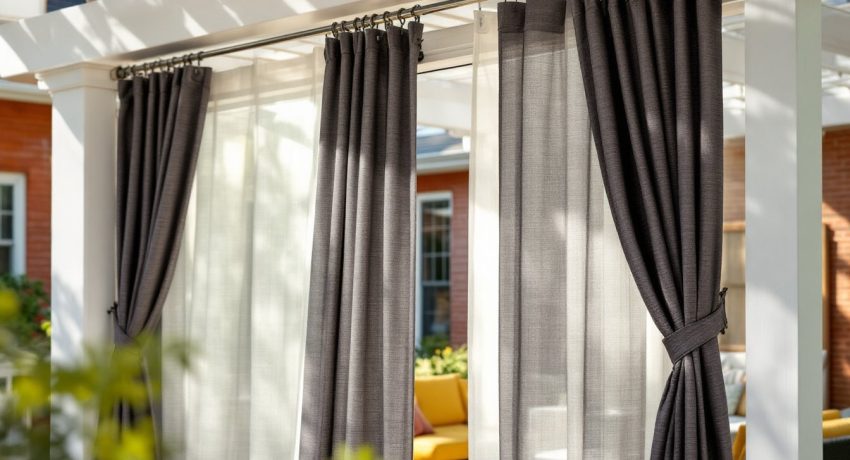
Contemporary patio curtains tend toward clean lines and solid colors or minimal patterns. Flat panels hung from stainless steel rods or cable systems read modern. Grommet-top curtains (where the rod threads through sewn metal rings) are practical and look sleek, especially in neutral fabrics.
If you want layered depth, pair sheer outdoor fabric with a heavier opaque layer, hanging them on separate rods lets you adjust privacy and light independently. Some homeowners use sheer white underneath and a solid color on top, creating a refined two-tone look. Many design-focused patios feature 20 outdoor curtain ideas that blend color blocking and texture for a high-end feel without custom-built structures.
For a softer aesthetic, tab-top or tieback curtain headers feel more relaxed. These work especially well on smaller patios where a streamlined look feels less heavy. Consider the hardware too, matte black or oil-rubbed bronze fittings look contemporary: polished brass or chrome feel more transitional.
Installation Tips for Hanging Patio Curtains
Proper installation determines whether your curtains hang well for years or start sagging and twisting within weeks. Start with measuring and planning, no shortcuts here.
Measure your space accurately. Curtain panels should be 1.5 to 2 times the width of the window or opening for proper fullness. If your patio opening is 8 feet wide, plan panels that total 12–16 feet across. If you’re hanging from a roof overhang or pergola beam, measure the usable width, accounting for mounting brackets at the ends.
Choose hardware rated for exterior use. Stainless steel or powder-coated aluminum rods and brackets won’t rust. Avoid bare steel or mild-gauge hardware, it’ll corrode within a season. For wider spans (over 6 feet), use a rod with center support brackets, or switch to cable systems with tensioners, which distribute weight better and resist sagging.
Mark mounting points with a level. A crooked rod is a crooked line, it’s the first thing people notice. Locate studs or structural members in your roof soffit or beam using a stud finder. If you’re mounting to composite materials or non-structural surfaces, use heavy-duty anchors or lag bolts appropriate to your substrate. Many patios have aluminum or vinyl fascia: you’ll need to find and bolt into the framing behind it, not just the trim.
Install hardware before hanging fabric. Assemble brackets, thread the rod, and hang it empty first. This is your chance to check for level, proper clearance, and that panels will hang freely without snagging on posts or railings.
Account for fabric weight and wind. Heavier fabrics like solution-dyed acrylic can weigh 10–15 pounds per panel when fully saturated. Wind loading is real, curtains act as sails. If your patio is in a windy area, consider tie-downs or clips at the hem to secure the bottom edge, or choose a lighter fabric. DIY patio curtain ideas emphasize securing fabric properly to prevent damage during storms.
Hem or finish edges before installation if you’re sewing. Factory-finished panels are easier and often worth the cost premium. If you’re cutting and hemming custom panels, use a sewing machine with heavy-duty thread and a ballpoint needle suited for outdoor fabrics. Straight stitches hold better than zigzag for exterior use.
Hang panels with clearance for movement. Leave a few inches of space between curtain hem and deck or ground so fabric doesn’t collect dirt and moisture. If your patio has a lip or railing, curtains should clear it by at least 6 inches when opened fully. This prevents snags and lets air circulate behind the fabric, reducing mildew risk.
Common mistakes: hanging curtains too close to the edges of the opening (they look cramped), using lightweight indoor-only rods (they sag immediately), and installing hardware directly into fascia without backing (it tears out under wind). Take your time measuring and fastening, and you’ll avoid all three.
Conclusion
Patio curtains transform an outdoor space with minimal fuss and moderate cost. Pick a durable outdoor fabric like solution-dyed acrylic, choose colors and styles that complement your home, and install hardware securely into framing, not trim. Done right, they’ll perform for years and earn their place every time you step outside. If you’re uncertain about mounting locations or load-bearing capacity, a quick consultation with a local contractor is worth the $100, it beats patching drywall or replacing deck boards later.