
Your patio is an outdoor room, it should be as intentional as your living room, but built to handle weather, foot traffic, and real life. Whether you’re starting from bare earth or replacing a worn surface, choosing the right patio material sets the tone for everything that comes next. The best patio surface balances aesthetics, durability, maintenance, and your budget. This guide walks through today’s top patio surface ideas, each with honest trade-offs so you can make a choice that works for your home, climate, and how you actually use outdoor space.
Table of Contents
ToggleKey Takeaways
- Choosing the right patio surface ideas requires balancing aesthetics, durability, maintenance, and budget against your climate and how you actually use the space.
- Natural stone pavers like slate and bluestone age beautifully over 20+ years with minimal maintenance, though they cost $15–$30 per square foot installed.
- Concrete offers versatility and affordability with finishing options like staining, stamping, and polishing that transform a basic slab into a refined outdoor surface.
- Permeable pavers reduce stormwater runoff and may qualify for municipal rebates, making them ideal for eco-conscious homeowners willing to invest in proper installation and grading.
- Before committing to a patio surface, inspect real-world examples in your neighborhood, verify local building codes and frost line requirements, and consider long-term replacement costs versus upfront price.
- Wood decking and composite materials provide warmth and aesthetic appeal, with composites offering rot resistance and minimal maintenance compared to pressure-treated lumber that requires restaining every 2–3 years.
Natural Stone Pavers for Timeless Appeal
Natural stone pavers, slate, bluestone, granite, limestone, and flagstone, are the gold standard for patios that age beautifully. Each paver is unique, with color variation and subtle texture that improves over time rather than looking tired. Slate and bluestone are especially popular in cooler climates: granite and limestone work well in hot regions. Installation involves setting pavers on a sand-and-gravel base with a landscape fabric underneath to prevent weeds and manage drainage. Stone pavers are heavy (plan for a second set of hands or rent a dolly). They’re also expensive, expect $15–$30 per square foot installed, depending on stone type and region. Maintenance is minimal: sweep, occasional sealant for porous stones, and sand the joints if weeds creep in. The big advantage? These surfaces improve with weathering and can last 20+ years with almost no replacement needed.
Concrete: Durable and Versatile
Concrete is the workhorse of patio surfaces, affordable, durable, and flexible enough to customize. A standard 4-inch slab poured over compacted gravel works for most climates, though you’ll want to check local frost lines (typically 24–48 inches deep) to prevent heave in freeze-thaw zones. Concrete cracks over time due to temperature swings and settling: this is normal and purely cosmetic unless the surface becomes uneven enough to trip someone. The real value lies in finishing options that make concrete feel far more refined than a flat gray pad.
Staining and Finishing Options
Acid staining creates mottled, variegated color by reacting with minerals in the concrete, think terracotta, slate blue, or charcoal tones. Water-based stains are less toxic and easier to apply than acid, though they don’t penetrate as deeply. Stamped concrete (applied before the surface sets) mimics stone, brick, or tile patterns and costs $8–$15 per square foot installed. Polished concrete delivers a sleek, indoor-like finish that’s easy to clean but slippery when wet, so it’s best for covered patios. Seal all concrete finishes every 2–3 years to resist staining and UV fading. Expect DIY staining to take a full day and require careful technique: hire a pro if you want flawless results.
Wood Decking and Composite Materials
Wood decks feel warm underfoot and integrate seamlessly into residential backyards. Pressure-treated lumber is the budget option ($10–$20 per square foot installed) but requires staining every 2–3 years and typically lasts 15 years before significant rot. Exotic hardwoods like ipe or cumaru resist decay naturally and age to silvery gray if left unsealed, but cost $25–$50+ per square foot. Composite boards (wood fiber blended with plastic polymer) bridge the gap: they don’t rot or splinter, require minimal maintenance, and cost $20–$40 per square foot. Composite won’t cup or warp like solid wood, but it’s slightly softer underfoot and can fade in direct sun. All elevated wood structures need proper ventilation underneath to dry out after rain, sitting directly on wet soil accelerates rot. Check local building codes for railing height (usually 36–42 inches), stair treads, and post spacing to avoid sagging joists.
Permeable Pavers for Eco-Conscious Homeowners
Permeable pavers let water drain through instead of pooling or running off into storm drains. They’re made from recycled asphalt, porous concrete, or resin-bound gravel and cost $12–$25 per square foot installed. Many municipalities offer rebates or tax credits for permeable surfaces because they reduce flooding and filter contaminants. Installation requires a deeper subgrade (typically 6–8 inches of gravel and sand) and careful grading to avoid low spots. These surfaces won’t eliminate puddles entirely if your yard sits in a bowl, you may also need a rain garden or dry well. Porous concrete is susceptible to freeze-thaw damage in harsh winters, so verify durability ratings for your climate. Maintenance involves occasional power washing and rejuvenating the gravel joints where weeds can root. For homeowners serious about stormwater management, permeable pavers are worth the extra cost and complexity.
Brick and Porcelain Tiles for Modern Style
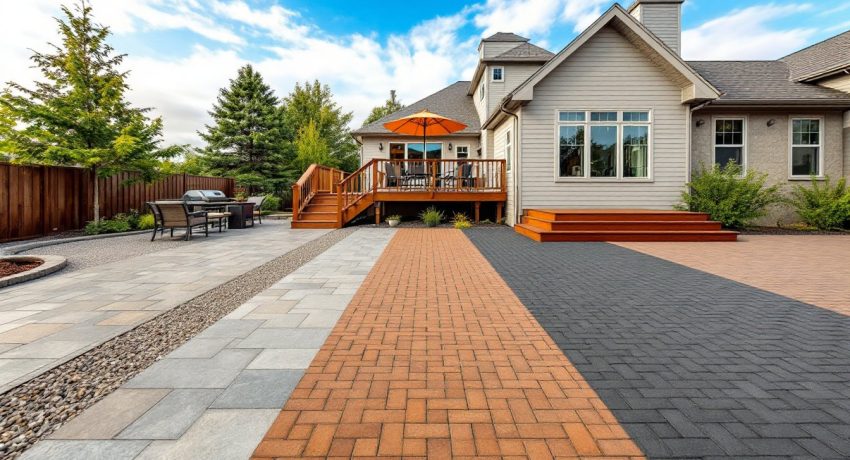
Clay brick pavers have old-world charm and cost $8–$15 per square foot installed, making them affordable. They’re installed similarly to stone pavers, with polymeric sand that hardens when wet. Over time, weather can cause efflorescence (white mineral bloom) on the surface, but this is harmless and usually fades naturally. Porcelain tiles offer the cleanest modern aesthetic, they come in larger formats (up to 24×24 inches), limiting grout lines and creating seamless visuals. Porcelain is denser than ceramic and resists freezing damage, staining, and wear. They cost $15–$30 per square foot installed and require thinset mortar and grout, making them trickier for DIY than brick pavers. If you choose porcelain, use a polymer-modified mortar rated for exterior use and ensure proper slope for drainage (typically 1/8 inch per foot). A sealer on grout lines prevents staining and water infiltration. Both materials are ideal for patios adjacent to the house where you want a finished, designed look rather than rustic texture.
Choosing the Right Surface for Your Needs
Start by auditing your climate, foot traffic, and maintenance appetite. Freeze-thaw cycles rule out some finishes (certain permeable pavers, some porous concrete): intense sun fades darker composites and wood stains. Think about whether you’ll use the space daily, host large gatherings, or mostly admire it from inside. Stone and brick are visually forgiving and age gracefully: concrete and composite show every footprint and bird dropping if not regularly cleaned. Budget constraints matter, but also factor in long-term cost: a cheap concrete slab might need replacement in 10 years, while pricey stone lasts 25+. According to hardscaping design principles, proportion and balance matter too, your patio should relate proportionally to your house footprint and yard size. Before committing, walk through neighborhoods or parks with examples of surfaces you’re considering. Look at how they’ve weathered. This real-world reconnaissance beats any product brochure. Finally, check local building codes early. Some jurisdictions require permits for patios larger than a certain size, especially if they involve grading or drainage. Your permit office can clarify frost line requirements and whether you need a licensed contractor versus DIY approval. Resources like Hunker’s home improvement guides and Southern Living’s outdoor design ideas showcase patio installations across various climates, helpful for seeing how different materials look after a season or two.