
Your kitchen is more than a place to cook, it’s often the heart of the home where meals, conversations, and memories happen. Choosing the right kitchen color scheme sets the tone for the entire space, affecting everything from how you feel when you’re prepping dinner to how your home looks when guests arrive. Whether you’re planning a full kitchen renovation or simply refreshing cabinet paint and walls, understanding color schemes for kitchens is crucial to getting a result you’ll love for years to come. This guide walks you through the options, from timeless neutrals to bold modern palettes to trending two-tone combinations, and shows you how to pick a scheme that matches your style and lighting.
Table of Contents
ToggleKey Takeaways
- Warm neutrals like creams and taupes are the most versatile and timeless kitchen color schemes, working beautifully with natural wood cabinets and stainless steel appliances.
- Always test gray and cool-toned paint samples in your actual kitchen under different lighting conditions for at least 24 hours, as these colors shift dramatically throughout the day.
- Bold color schemes for kitchens work best on lower cabinets or accent islands with lighter walls and adequate task lighting to prevent overwhelming the space.
- Two-tone kitchen palettes with contrasting upper and lower cabinets require careful planning around countertop color and proper surface preparation with primer and sanding between coats.
- Choose your kitchen color scheme to match your personal style and home’s overall aesthetic while considering fixed elements like cabinet material, natural light, and existing countertops and flooring.
- Warm-white LED lights (2700-3000K) are ideal for kitchens because they’re energy-efficient and flatter most skin tones and food colors while complementing various color palettes.
Classic Neutral Color Schemes
Timeless Warm Neutrals
Warm neutrals, creams, taupes, warm grays, and soft browns, remain the safest and most versatile choice for kitchens. These colors feel inviting without demanding attention, making them ideal if you plan to resell or simply want a calm backdrop for your daily routine. Warm neutrals pair beautifully with natural wood cabinets (especially oak or maple) and stainless steel appliances, which is why they’ve dominated kitchen design for decades.
The key to warm neutrals is getting the undertone right. Look for colors with hints of yellow, red, or orange rather than pure gray. Benjamin Moore’s Accessible Beige and Sherwin-Williams’ Accessible Beige are industry standards, they photograph well in different lighting and rarely look cold or industrial. If you’re painting cabinets, apply a quality primer-sealer first, especially over glossy factory finishes, to ensure good adhesion and prevent bleed-through.
Cool Neutrals and Gray Tones
Cool neutrals, soft grays, pale blues, and greige (gray-beige blend), work beautifully in kitchens with abundant natural light or modern finishes. Gray has become increasingly popular because it feels sophisticated without the stuffiness of pure white. Cool tones complement stainless steel, polished nickel hardware, and contemporary cabinet styles.
When selecting gray for cabinets or walls, always test samples in your actual kitchen at different times of day. Grays can shift dramatically under fluorescent, LED, or warm incandescent bulbs. A sample that looks perfect at 2 p.m. may look bluish or sickly under evening lighting. Paint large swatches on cardboard and tape them to your cabinets or walls for at least 24 hours before committing. Cool neutrals work especially well when paired with white or light subway tile backsplashes and open shelving to prevent the space from feeling too heavy.
Bold and Modern Color Combinations
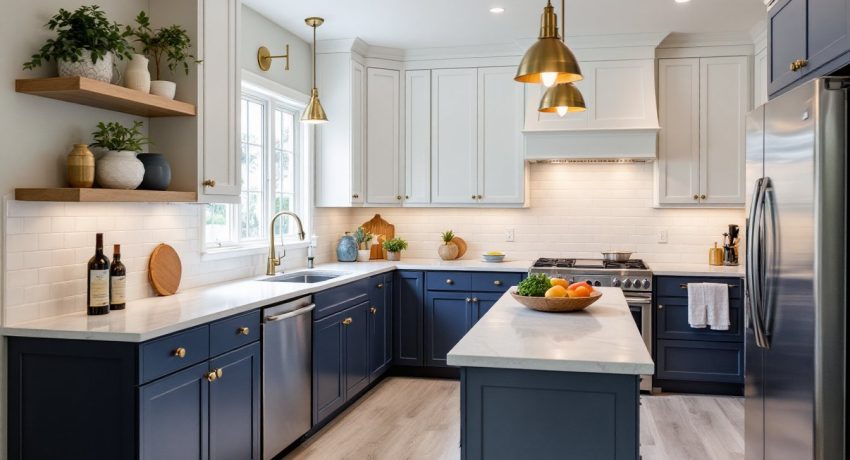
If neutrals feel too safe, bold color combinations bring personality and contemporary flair to your kitchen. Deep navy blue paired with white trim and brass hardware creates nautical sophistication. Forest green cabinets paired with warm wood shelving and gold accents deliver a spa-like tranquility. Dark charcoal or black cabinets paired with light countertops and open shelving create high-contrast drama that photographs beautifully.
Bold colors work best on lower cabinets or an accent island rather than completely surrounding the space, this approach gives you impact without overwhelming the room. If you’re going bold on cabinets, keep walls lighter (white, cream, or soft gray) to balance the visual weight. Kitchen with dark cabinets benefit from adequate lighting: under-cabinet LED strips and pendant lights over the island are non-negotiable, not optional.
Warm accent colors like terracotta, mustard, or rust pair well with natural wood and create a lived-in, artisanal feel. These colors often work better as accent walls or on a single wall behind open shelving rather than on all cabinetry. Remember that bold colors date faster than neutrals, so choose them because you love them now, not because they’re trending. Paint quality matters here, a premium paint with better pigment saturation delivers richer, more satisfying color than budget options.
Trending Two-Tone Kitchen Palettes
Two-tone kitchens, typically featuring upper and lower cabinets in contrasting colors, have dominated design trends since 2024 and show no signs of slowing. This approach lets you have your bold color and eat neutral too: perhaps white uppers with navy lowers, cream uppers with charcoal lowers, or even pastels paired with white.
Two-tone designs require careful planning. The visual break happens at the countertop level, so your countertop color must work with both upper and lower shades. Quartz, granite, and butcher block are forgiving choices that harmonize with almost any palette. The island often gets its own color story, sometimes matching the lowers, sometimes standing alone in a third complementary color.
If you’re considering a two-tone repaint, start by masking the line where colors meet with painter’s tape, then sand the transition area lightly with 120-grit paper to avoid a visible ridge. Apply primer to both colors and allow proper drying time between coats: rushing this step leads to poor adhesion and visible overlap marks. Two-tone cabinets also work beautifully with mixed hardware finishes, perhaps brushed nickel on uppers and oil-rubbed bronze on lowers, adding layers of visual interest without chaos.
Choosing the Right Kitchen Color Scheme for Your Style
Start by honestly assessing your personal style. Do you gravitate toward minimalist, Scandinavian spaces? Warm, farmhouse interiors? Modern industrial? Eclectic bohemian? Your kitchen colors should feel like a natural extension of your home’s overall aesthetic, not a jarring departure.
Next, consider the physical realities: cabinet material (stained wood limits your color options), natural light availability (north-facing kitchens need warmer colors to avoid feeling cold), and existing elements you’re keeping (countertops, flooring, tile backsplash). If you’re keeping honey-toned oak cabinets, warm neutrals or rich jewel tones work far better than cool grays. If you have dark granite countertops, everything from bold jewel tones to light pastels can work, the key is adequate contrast.
Look at real examples in homes similar to yours. Design blogs and social media offer endless inspiration, but they’re heavily edited and lit, seek out examples in unfinished spaces or kitchens photographed in natural light. Real kitchens with green cabinets or kitchens with blue cabinets can show you how colors actually perform in lived-in spaces. Keep a digital or physical swatchboard: collect paint samples, countertop chips, hardware samples, and photos of backsplash tiles you’re considering. Live with these samples for a week or two before finalizing decisions.
Lighting and Color: Getting the Balance Right
Lighting is the invisible force that changes how your kitchen colors look and feel. The same paint color appears warm and golden under incandescent bulbs, cool and clinical under fluorescent tubes, and somewhere in between under modern LED. Before committing to any kitchen color scheme, evaluate your lighting.
If your kitchen relies on overhead fluorescent or cool-white LED (5000K or higher), warm colors become essential, otherwise the space feels cold and institutional. If you have warm-toned ambient light (2700K LED or incandescent), you have freedom to use cooler accent colors without the space feeling arctic. Under-cabinet lighting is crucial for kitchens with dark cabinets: it prevents the space from feeling like a cave and provides necessary task lighting for food prep.
Pendant lights above an island, sconces flanking a sink window, and recessed ceiling lights all contribute to the kitchen’s overall color perception. Warm-white LED lights (2700-3000K) are ideal for kitchens because they’re energy-efficient, long-lasting, and flatter most skin tones and food colors. Cool-white LEDs (4000K+) work if your color scheme is deliberately modern and cool, but avoid them in warm, traditional spaces. Test your color choices under the actual lighting you’ll use, paint swatches, hold them under different fixtures, and observe them at different times of day. This simple step prevents costly color regret after a full cabinet repaint.