
A BBQ pergola transforms your backyard into a dedicated outdoor entertaining hub that marries function with style. Whether you’re hosting weekend cookouts or creating a shaded retreat for your family, a well-designed pergola frames your grill area and extends your living space into the yard. It’s more than just a decorative addition, it’s an investment in comfort, property value, and the way you’ll spend warm months ahead. This guide covers design styles, practical features, materials, and the steps to build or install a pergola that fits your space and skill level.
Table of Contents
ToggleKey Takeaways
- A BBQ pergola creates a defined, comfortable entertaining space that provides partial shade while allowing airflow, transforming your backyard into a functional outdoor hub.
- BBQ pergola ideas range from modern minimalist designs with clean lines to rustic Mediterranean styles with heavy timber and living vines, each offering distinct aesthetic and functional benefits.
- Material selection—pressure-treated lumber, cedar, aluminum, or vinyl-wrapped wood—determines durability and maintenance, so choose based on your climate, budget, and desired lifespan.
- Proper post installation on concrete footings below the frost line is the single most critical step; wobbly or improperly set posts compromise the entire structure’s safety and longevity.
- Check local building codes and secure permits before construction, as height restrictions, setback requirements, and snow/wind load ratings vary by region and affect structural integrity.
- A quality BBQ pergola costs $2,000 to $10,000+ but extends your home’s usable square footage and increases curb appeal, making it a cost-effective alternative to a full covered patio.
Why A BBQ Pergola Is Worth The Investment
A pergola serves several purposes beyond looks. It provides partial shade, which keeps you and your guests comfortable while grilling, even on scorching days. The lattice or slat design filters harsh sunlight while allowing breezes to flow, unlike a solid roof. You’ll find yourself using your outdoor kitchen setup far more often when it’s not unbearably hot.
From a practical angle, a pergola creates a defined space that signals “this is where entertaining happens.” It anchors your grill, prep tables, and seating into a cohesive zone rather than scattered around the yard. A pergola also adds visual interest and can increase curb appeal, potential buyers notice a well-built outdoor structure.
Finally, there’s the cost-to-value equation. A quality pergola runs anywhere from $2,000 to $10,000+ depending on materials and size, but it extends your home’s usable square footage and lifespan of your outdoor entertaining setup. It’s less expensive than a full covered patio, yet delivers similar functional benefits with a lighter visual footprint.
Modern Design Styles For Your Outdoor BBQ Pergola
Contemporary And Minimalist Designs
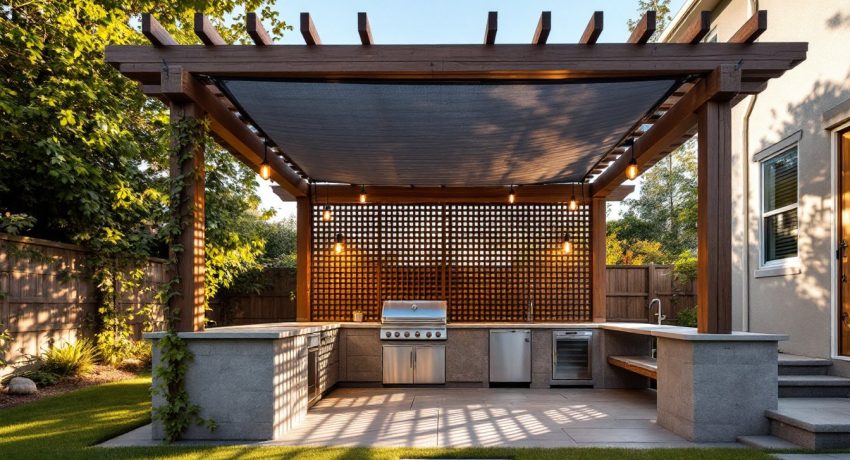
Clean lines and open frameworks define modern pergola designs. Think straight posts, geometric grid patterns, and minimal ornament. These structures work well with sleek stainless-steel grills, concrete pavers, and built-in seating with concrete blocks and wood tops. A minimalist pergola made from pressure-treated 4×4 posts and 2×6 beams looks uncluttered and feels like an extension of contemporary home architecture.
Color matters here: black metal pergolas or naturally weathered wood create visual pop without fussiness. Pair it with shade cloth in a neutral tone if you need extra UV protection, modern shade cloth comes in charcoal, sand, or white and can be added or removed seasonally.
Rustic And Mediterranean Influences
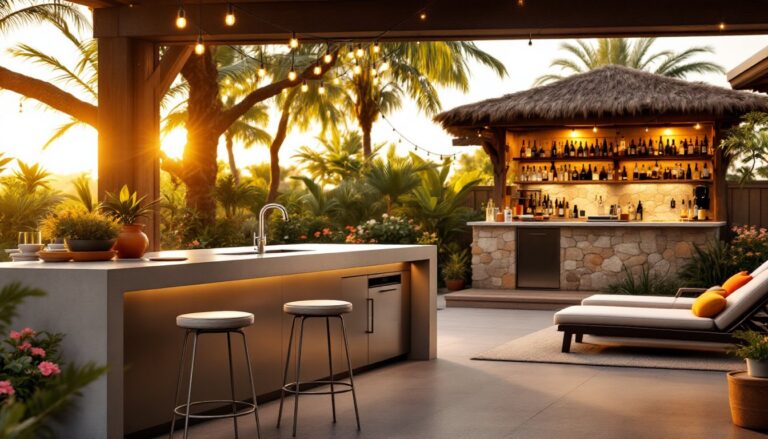
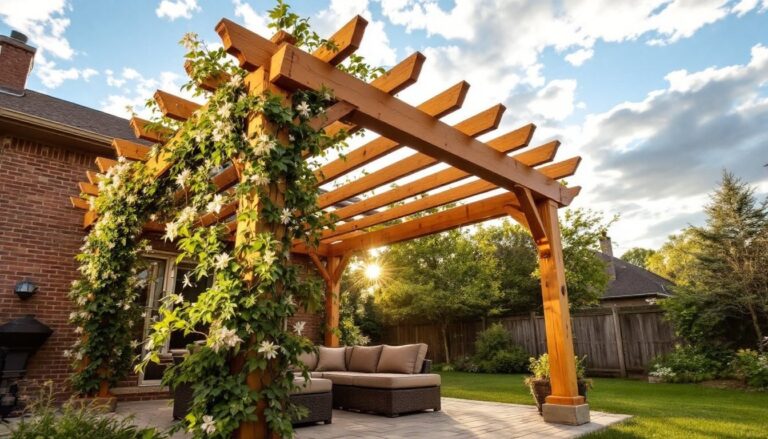
Rustic pergolas lean toward heavier timber, often featuring rough-sawn cedar or reclaimed wood with thicker spacing between rafters. Mediterranean styles borrow stucco columns, clay tile roofing accents, or even living vines, think grape vines, clematis, or climbing roses trained along the frame. These designs embrace the idea that a pergola ages beautifully: weathered wood and patina are features, not flaws.
Mediterranean pergolas often incorporate stone elements, columns, pavers, or planter boxes in warm tones. Warm lighting like Edison bulbs or lanterns hanging from the beams reinforces the rustic feel. This style works especially well in arid or warm climates and pairs naturally with outdoor kitchens that have tile or stone finishes. Southern Living covers outdoor porch and garden designs that blend rustic charm with functional entertaining areas.
Essential Features And Materials To Consider
Material selection sets the tone for durability and maintenance. Pressure-treated lumber is affordable and rot-resistant: cedar is naturally attractive and ages gracefully but costs more: aluminum frames won’t rot or splinter but feel industrial without styling. Vinyl-wrapped wood combines appearance with low upkeep, pricier upfront but requires almost no staining or sealing.
Shade solutions range from adjustable louvered roofs (motorized or manual slats you tilt for sun control) to fixed lattice, shade cloth, or polycarbonate panels. Retractable shade cloth gives you flexibility on hot days. Polycarbonate panels (clear or tinted) provide maximum rain protection but reduce airflow and cost significantly more.
Foundation and posts matter most for longevity. Posts must sit on concrete footings buried below your local frost line (typically 3–4 feet in cold climates). Use galvanized steel post bases to prevent wood from contacting soil and rotting. Your local building code specifies footing depth and post spacing for wind and snow load ratings, check before you dig.
Electrical integration for lights or a ceiling fan should be planned during construction, not added later. Running conduit inside posts and beams is simpler than surface-mounting it. If you’re not comfortable running electrical in a structural frame, hire a licensed electrician.
Built-in features like a prep counter, grill surround, or built-in seating add functionality. Hardscaping 101 from Gardenista covers pergola materials and design fundamentals in detail. Start with a solid base (concrete pad or paver foundation) if you’re adding countertops or heavy equipment nearby.
Practical Tips For Building And Installing Your Pergola
Planning and permits: Check your local building code before breaking ground. Most jurisdictions require permits for permanent structures over a certain size. Setback requirements from property lines, height restrictions, and snow/wind load ratings vary by region. A permit inspector ensures your posts are properly set and your structure meets code, this adds a week or two but protects you legally and structurally.
Measuring and layout: Measure twice, three times if you’re working alone. Mark post locations with spray paint and dig test holes to check for buried utilities (call 811 beforehand). Use string lines and a level to ensure posts are plumb and beams are square. A small error in layout multiplies across the frame.
Material acclimation: If using wood, let it sit on-site for a few days before building so it adjusts to local humidity. Dry lumber swells when exposed to moisture: building before acclimation can lead to gaps and warping.
Post installation: Dig holes to frost line depth (check local code). Set posts in concrete footings, at least 2–3 feet deep in moderate climates. Use a post level to keep posts plumb before the concrete sets. This is the single most important step: wobbly posts ruin everything.
Tool and safety requirements: You’ll need a circular saw or miter saw (for clean 45° angles on rafters), a drill-driver, level, tape measure, and square. Rent a post-hole digger or auger if digging multiple deep holes by hand. Wear safety glasses, work gloves, and a dust mask when cutting pressure-treated lumber, the chemical preservatives are harmful to inhale. Tie off if working on a ladder or on top of beams.
Assembly and fastening: Use galvanized or stainless fasteners to prevent rust stains on wood. Lag bolts or structural screws (like GRK or Spax brand) are stronger than nails for framing. Predrill holes to prevent splitting. Ana White offers detailed woodworking plans and tutorials for DIY builders at every skill level.
When to call a pro: If your site has poor drainage, uneven terrain, or loads requiring engineered drawings, hire a carpenter or structural contractor. Same goes if you’re unsure about electrical work or live in an area with heavy snow loads, structural failure due to underbuilt support is expensive and dangerous.
Conclusion
A BBQ pergola isn’t just an outdoor accessory, it’s a purposeful addition that encourages entertaining, provides comfort, and adds real value to your property. Whether you choose modern minimalism or rustic charm, focus on solid construction, proper materials, and code compliance. Take time to plan, don’t skip prep work, and be honest about whether you need professional help. The investment pays dividends every time you fire up the grill under your own shade.